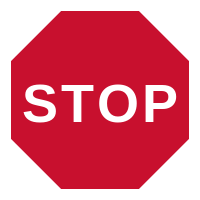
Stop sign: Stop completely, then go when it is safe
This sign always requires a complete stop, even when the roads are empty. Only after stopping may you go on when it is safe.
Home › Road signs
Shape and colour tell you what kind of sign it is before you can read it. Learn the groups, then the signs learners most often get wrong.
Practise for free: questions with explanations, and a full test simulator.
A stop sign means a complete stop behind the line, even on an empty road. A yield sign means slow down, be ready to stop and give way; you need not stop if the way is clear.
This sign always requires a complete stop, even when the roads are empty. Only after stopping may you go on when it is safe.
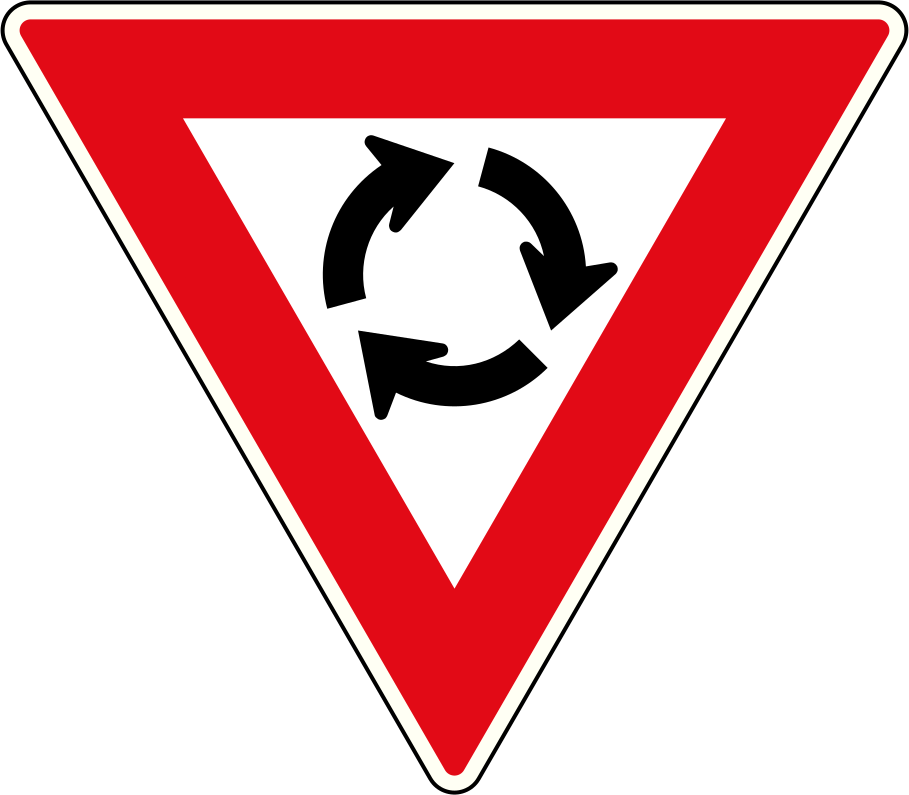
This is the yield-at-mini-circle sign: a yield triangle with circle arrows. Give way to any vehicle that will cross a yield line before you, including vehicles already in the circle, then drive round the circle clockwise.
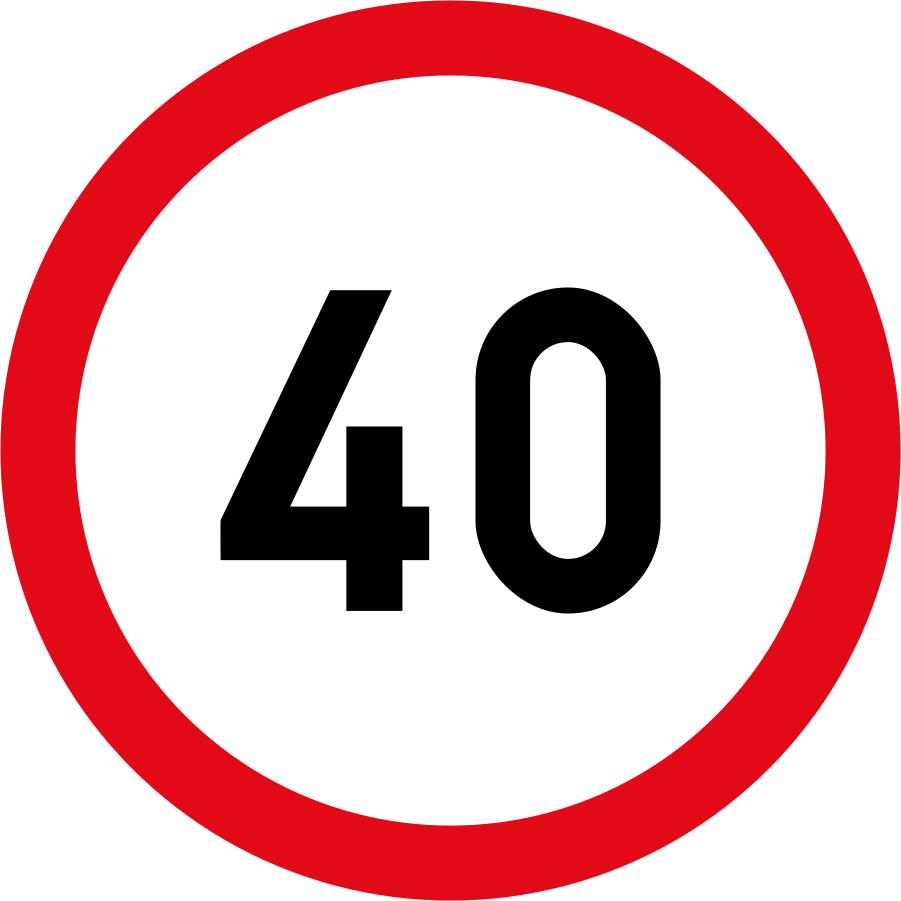
A number in a red ring is a speed limit: the highest speed allowed. A white number on a blue disc would be a minimum speed instead.
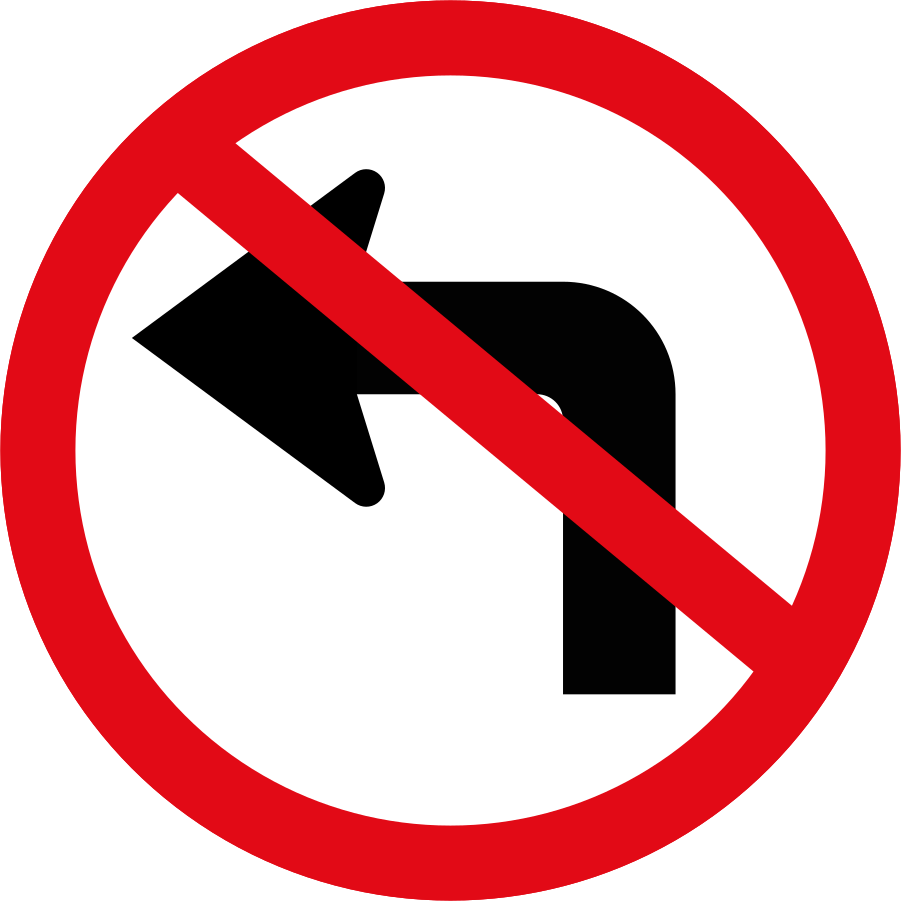
The arrow first goes straight up and then turns left, so the ban is on turning left at the junction ahead. The no-left-turn sign at the junction itself shows a straight arrow pointing left under the red bar.
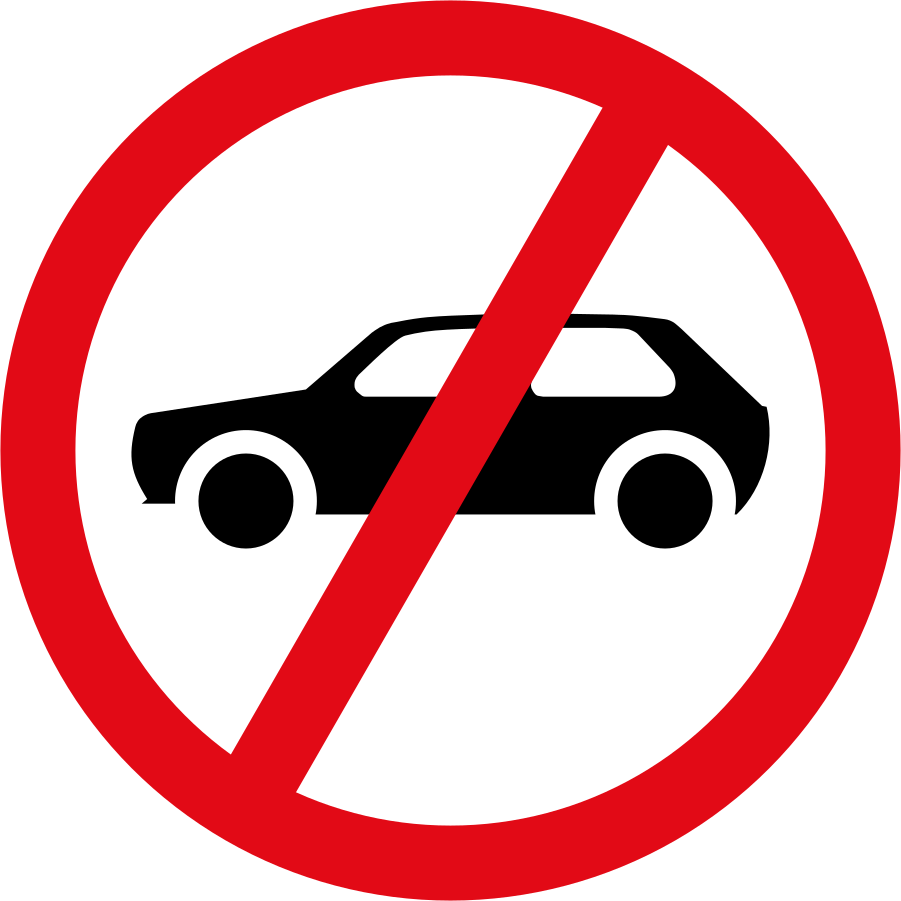
A red ring and diagonal bar over a car symbol prohibits motorcars. A blue disc with the same car would mean the opposite: cars only.
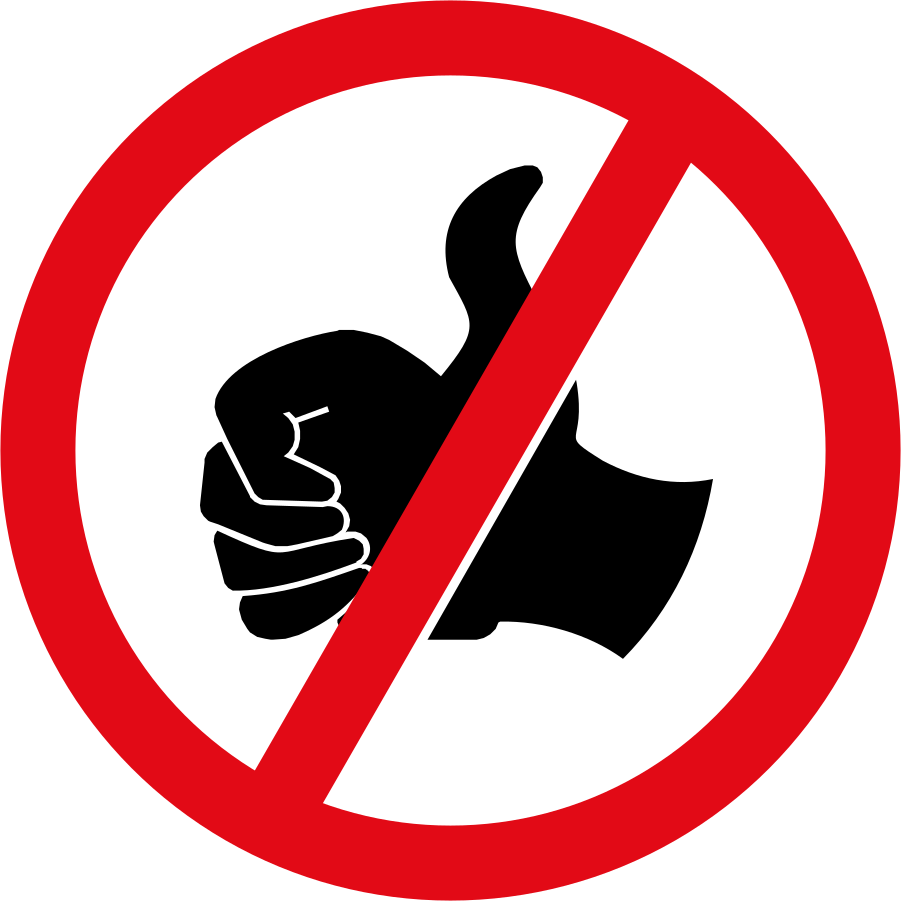
A red ring with a red diagonal bar is a prohibition. The raised-thumb symbol means hitch-hiking (asking passing drivers for a lift) is not allowed here.
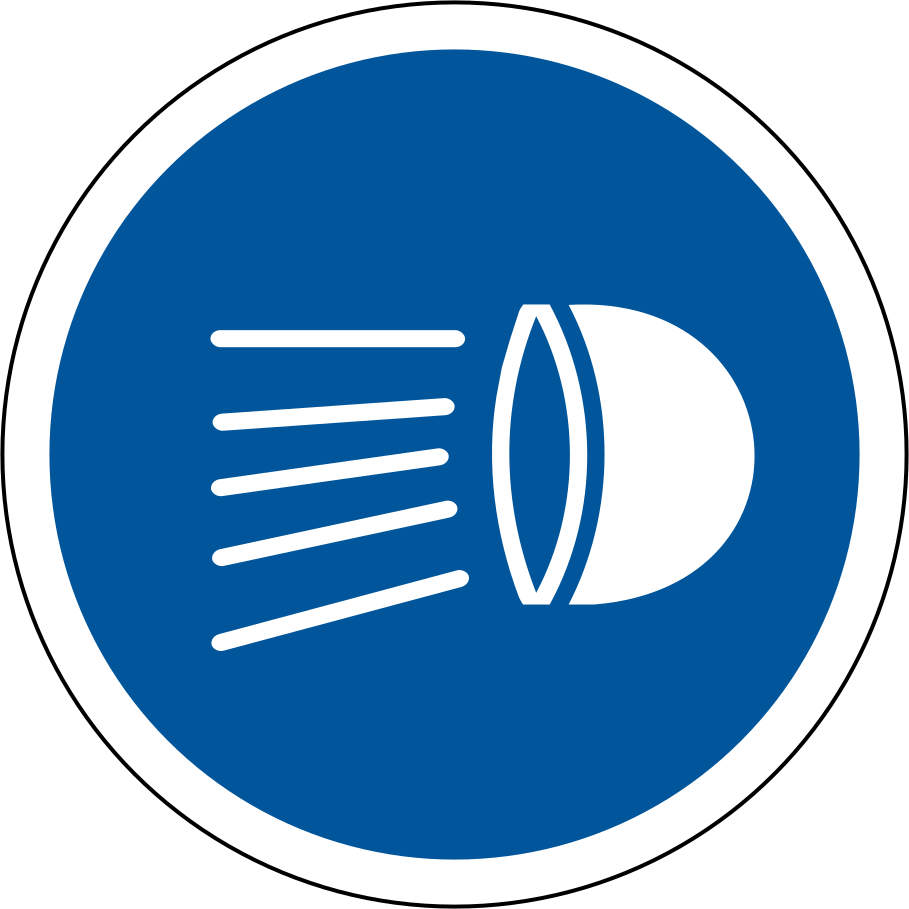
A blue disc is a command you must obey. The headlamp symbol tells you to switch your headlamps on, for example before a tunnel or on a stretch where you must be seen.
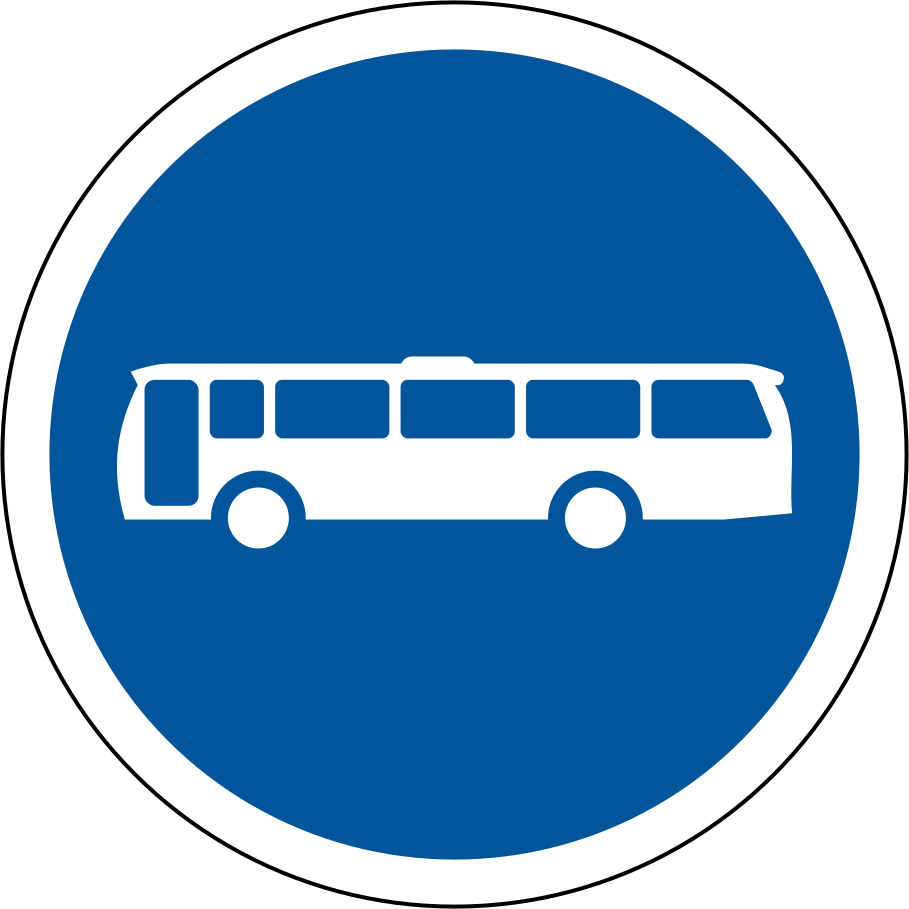
A blue disc is a command sign. With a bus symbol it means the road or lane is for buses only; a red ring with a bus would ban buses instead.
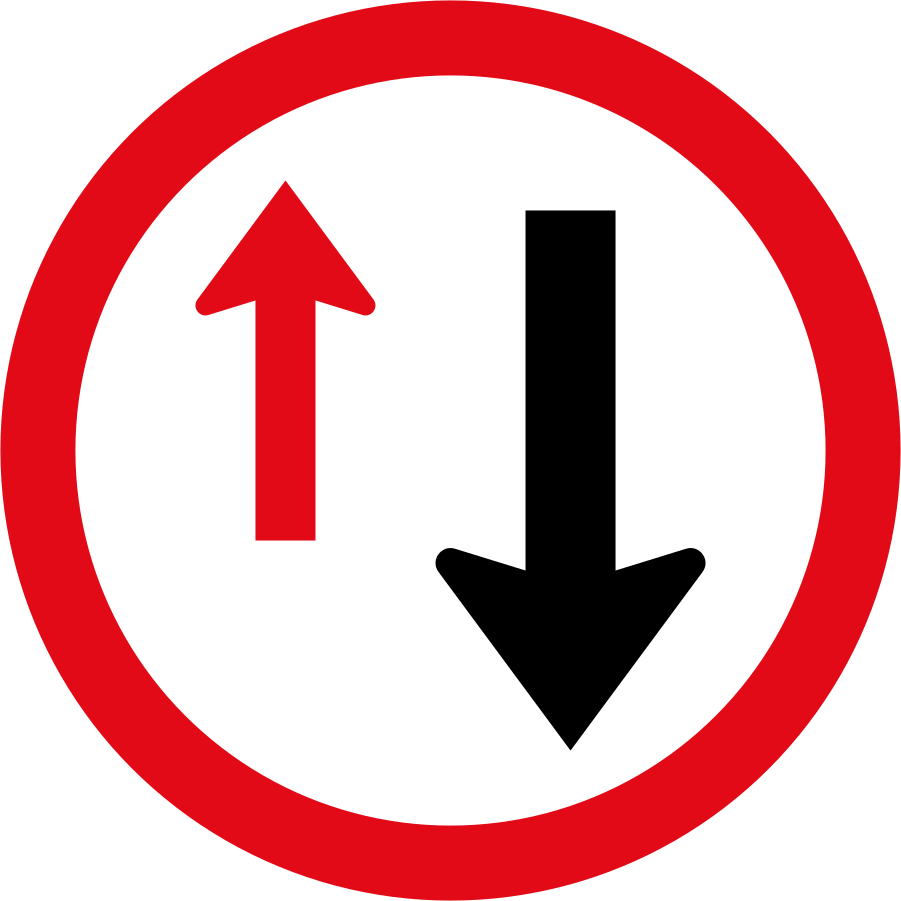
On this sign the red arrow is your direction. It means you must let oncoming vehicles through the narrow part first.
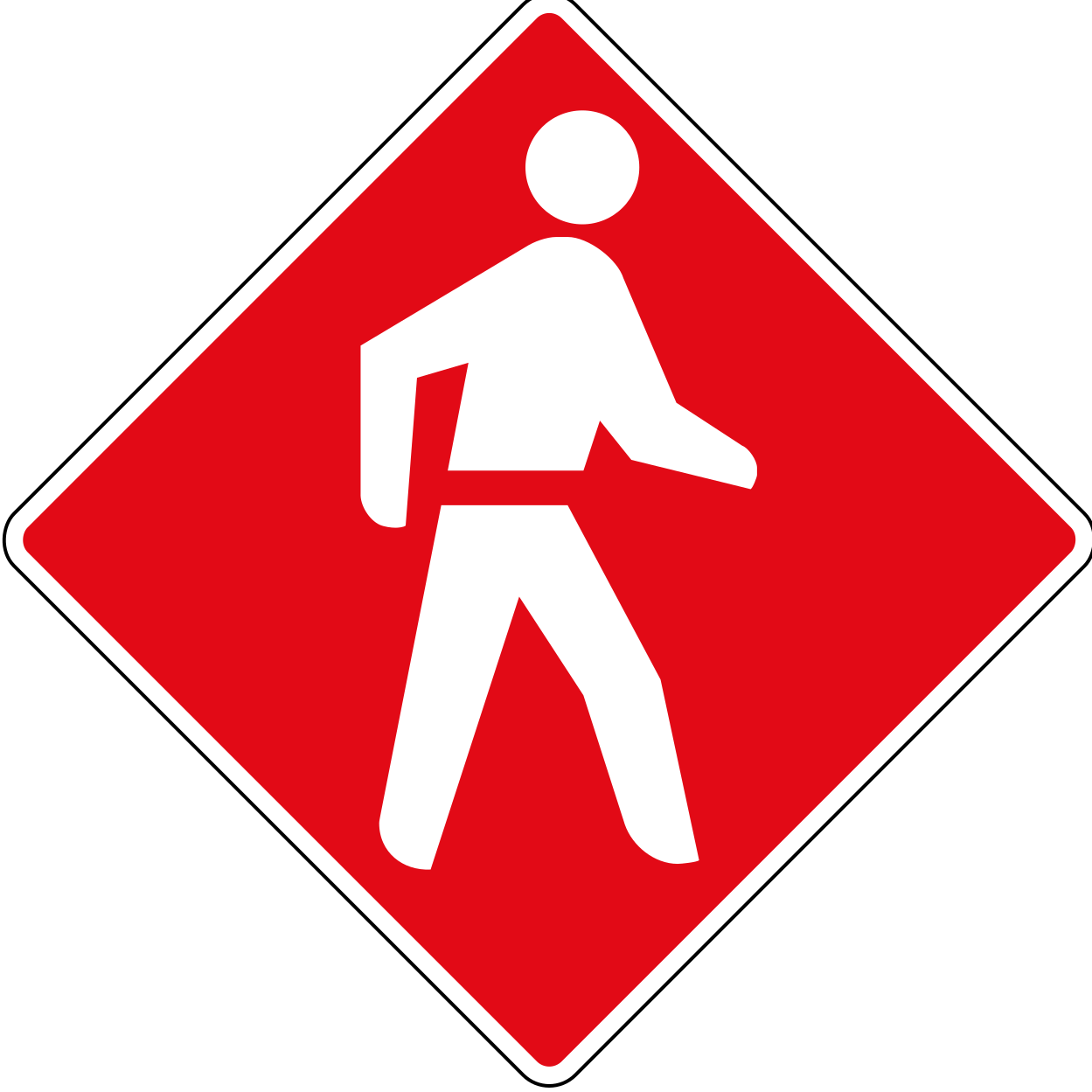
This red diamond with a white walking person starts a pedestrian priority zone. Only delivery, maintenance and emergency vehicles may enter, at no more than 15 km/h, and they must give way to people on foot.
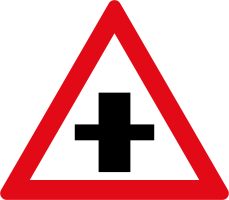
On this crossroads warning the road you are on is drawn with a thicker line, showing it is the priority road. Stay alert, as side traffic may still pull out.
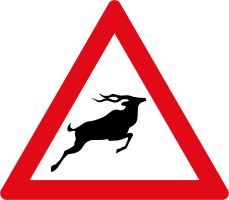
The leaping antelope warns that wild animals may be on or crossing the road. A game reserve would be shown on a brown tourism sign.
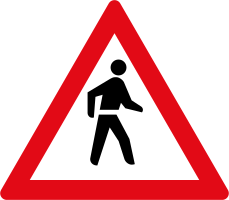
A walking figure in a warning triangle warns of pedestrians on or near the road. A pedestrian crossing, a ban and a priority zone each have their own different sign.
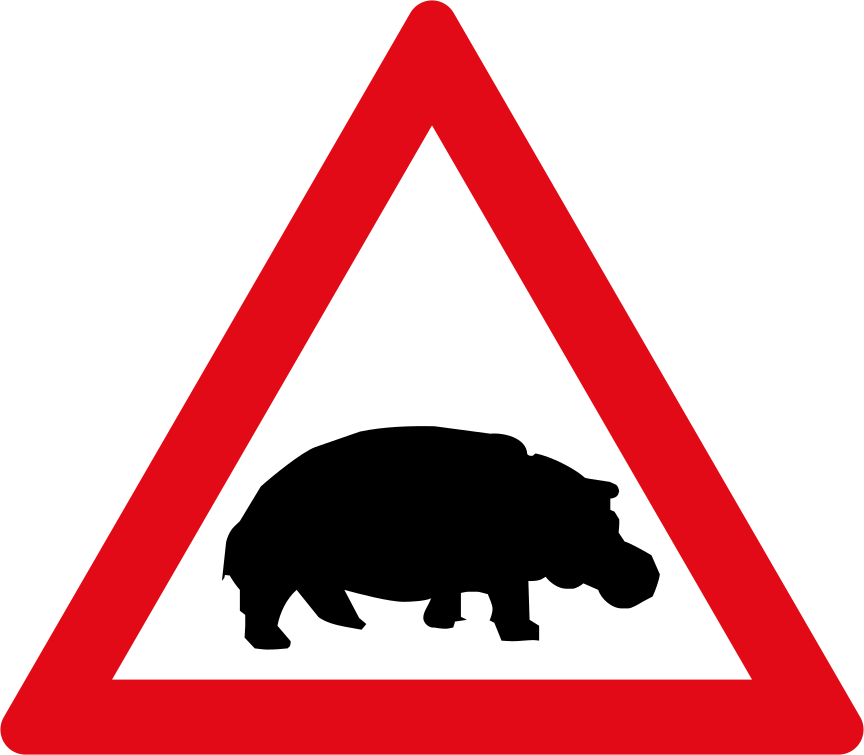
The triangle shows a hippo, so hippos may cross here, often near rivers and at night. Slow down and watch the road edges.
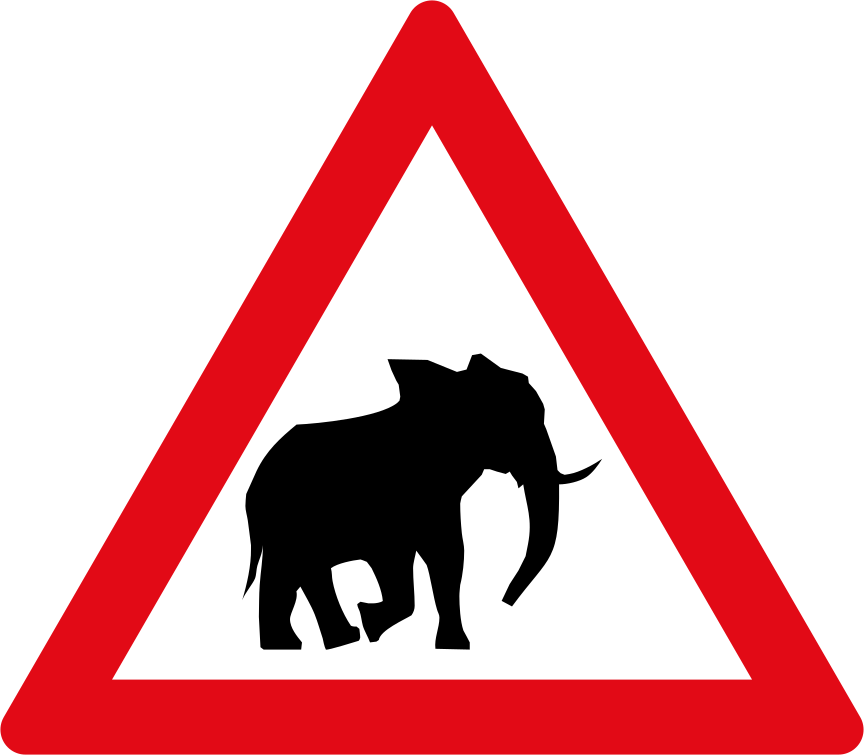
This warning triangle shows an elephant. Keep a safe distance from elephants, never drive close to them, and be ready to stop and wait.
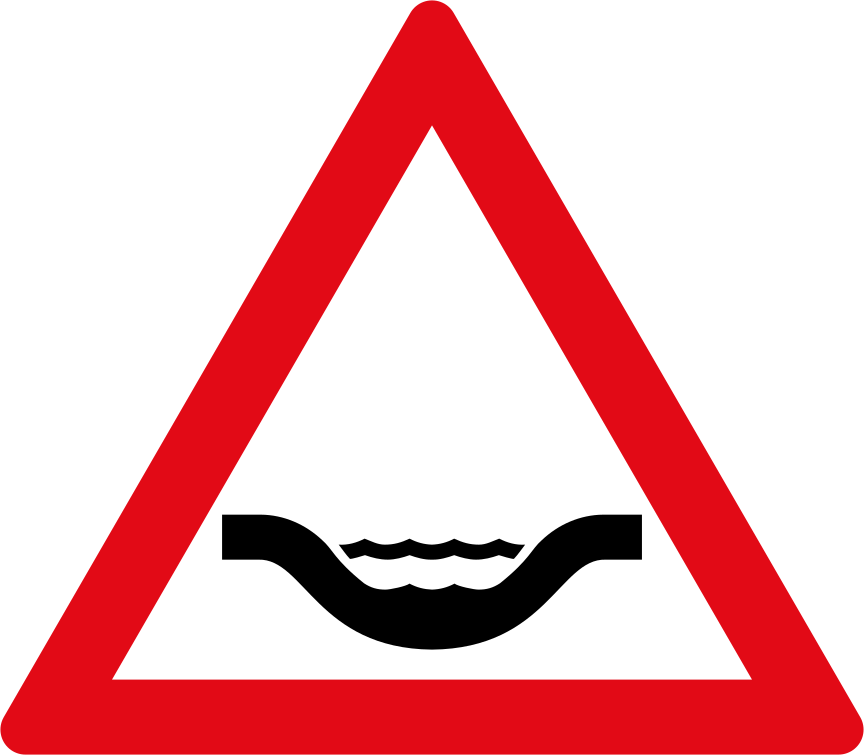
The dip with water shows a drift or ford, where the road goes down through a stream. After rain, water may cover the road.
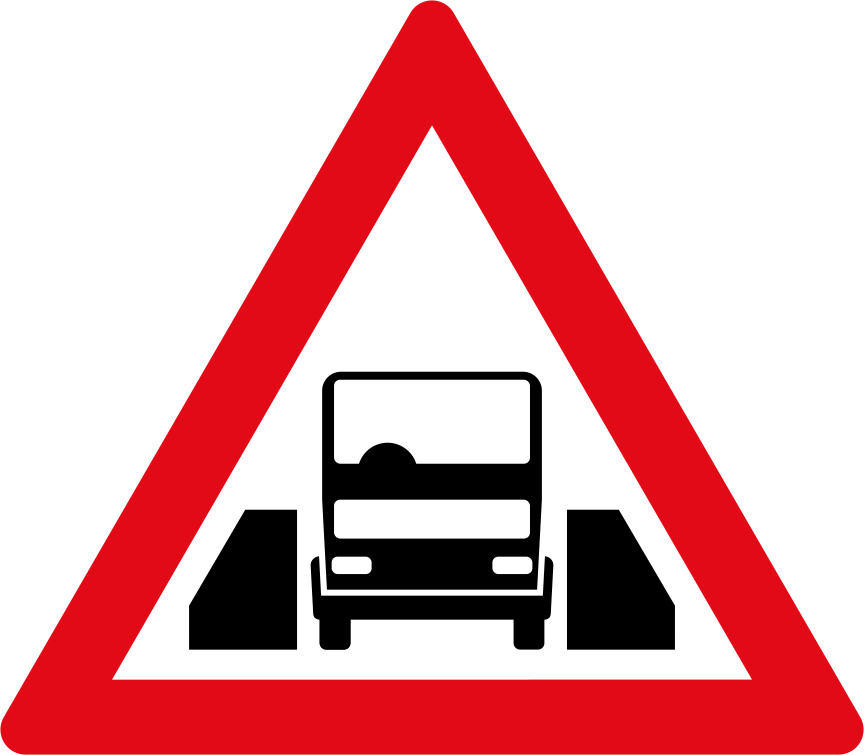
A single-vehicle-width passage is too narrow for two vehicles to pass each other. Check that it is clear and be ready to wait for oncoming traffic.
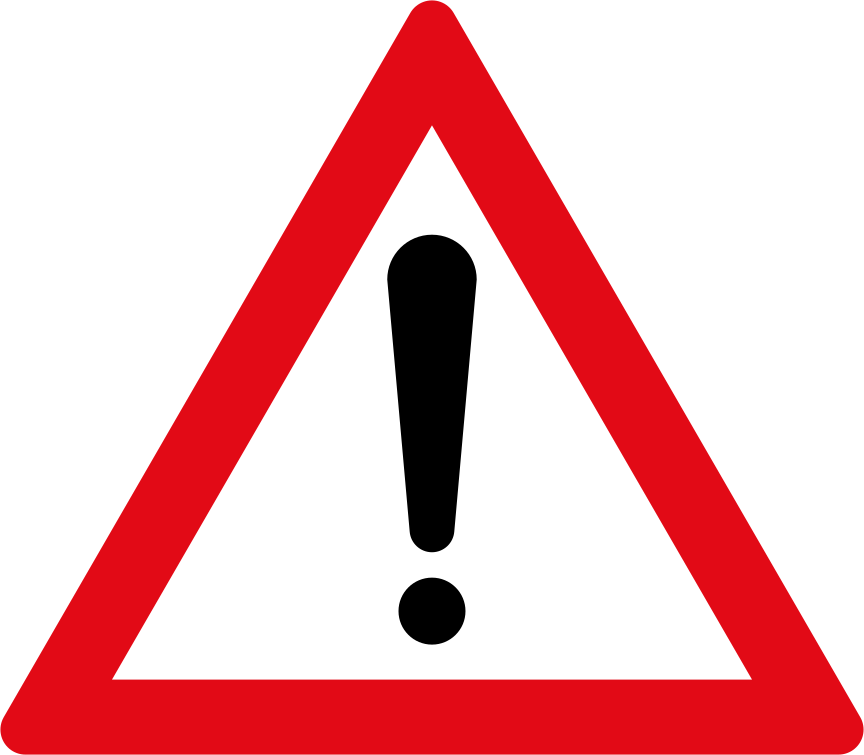
The exclamation mark is the general 'other danger' warning. It is used when no special symbol fits, often with a plate that names the hazard. Slow down and look.

This T-junction marker has red chevrons pointing both left and right. Your road ends at the board, so slow down and turn one way or the other.
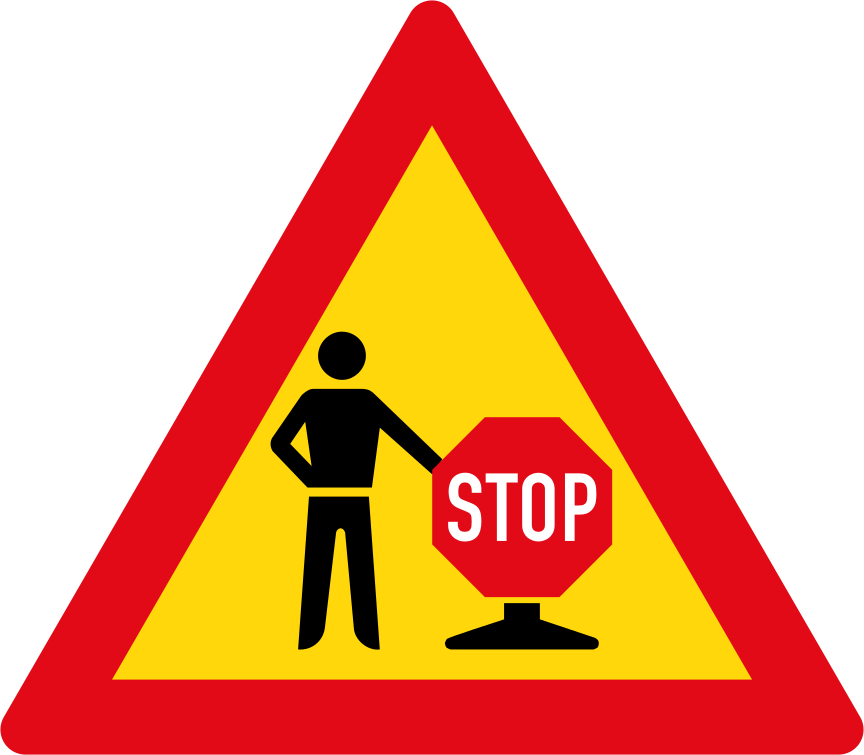
The person with a STOP sign shows stop/go control. At one-lane works traffic takes turns, so be ready to stop and only go when shown GO.
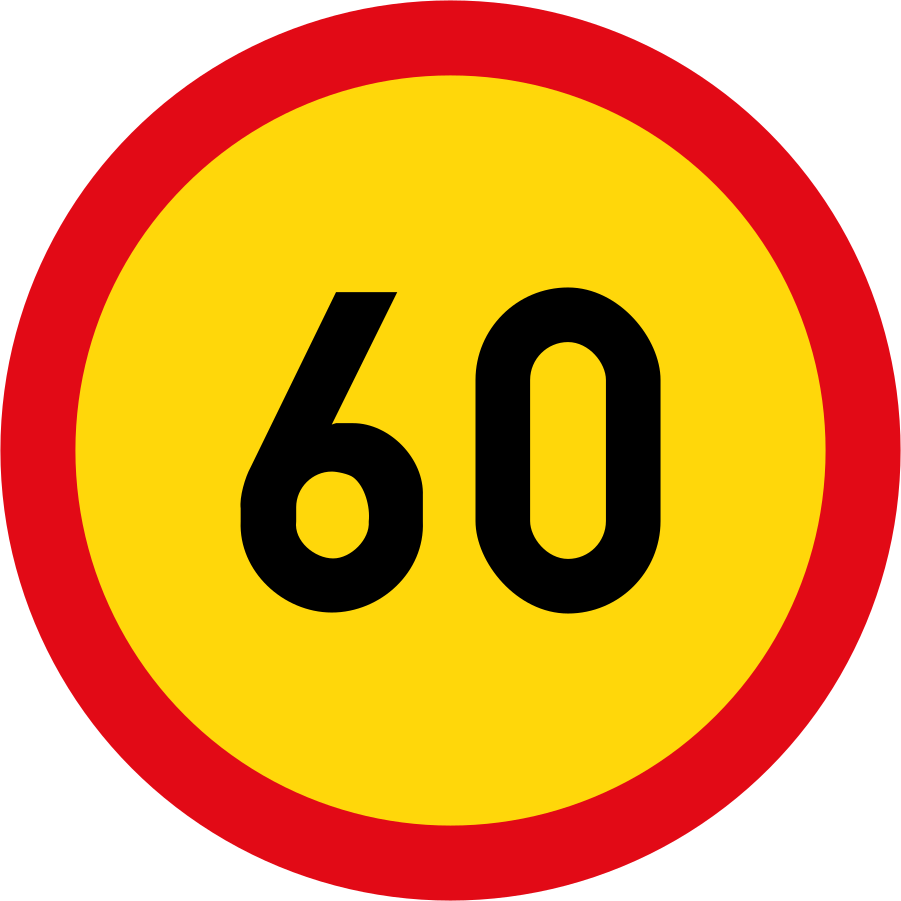
A red ring makes it a regulatory speed limit. The yellow background only shows that it is temporary; it is just as binding as a permanent limit.
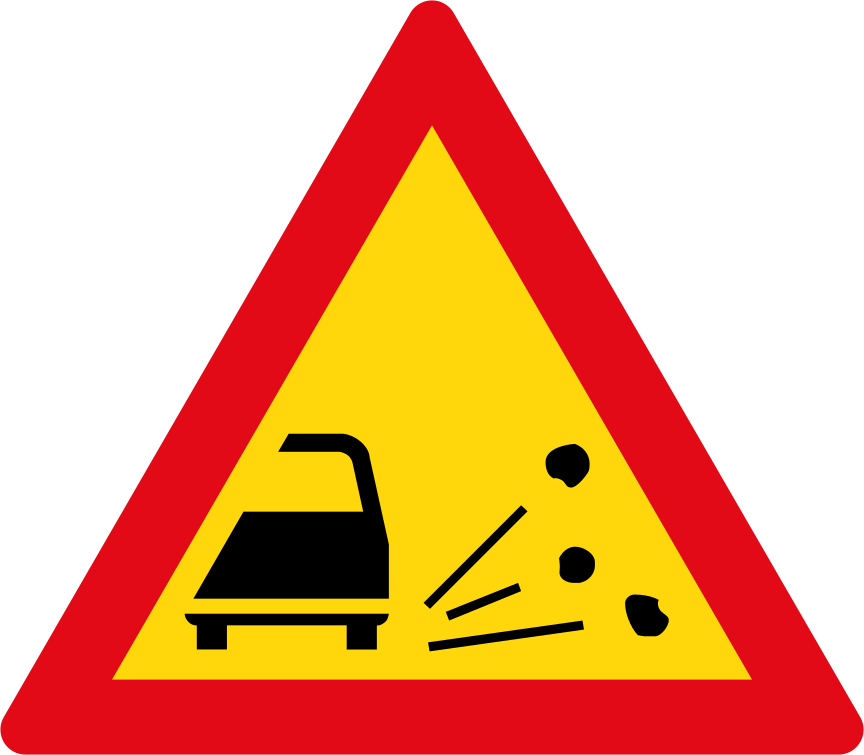
This temporary sign warns of loose material, often fresh chips on new tar. Slow down and keep well back, as stones flung by wheels break windscreens.
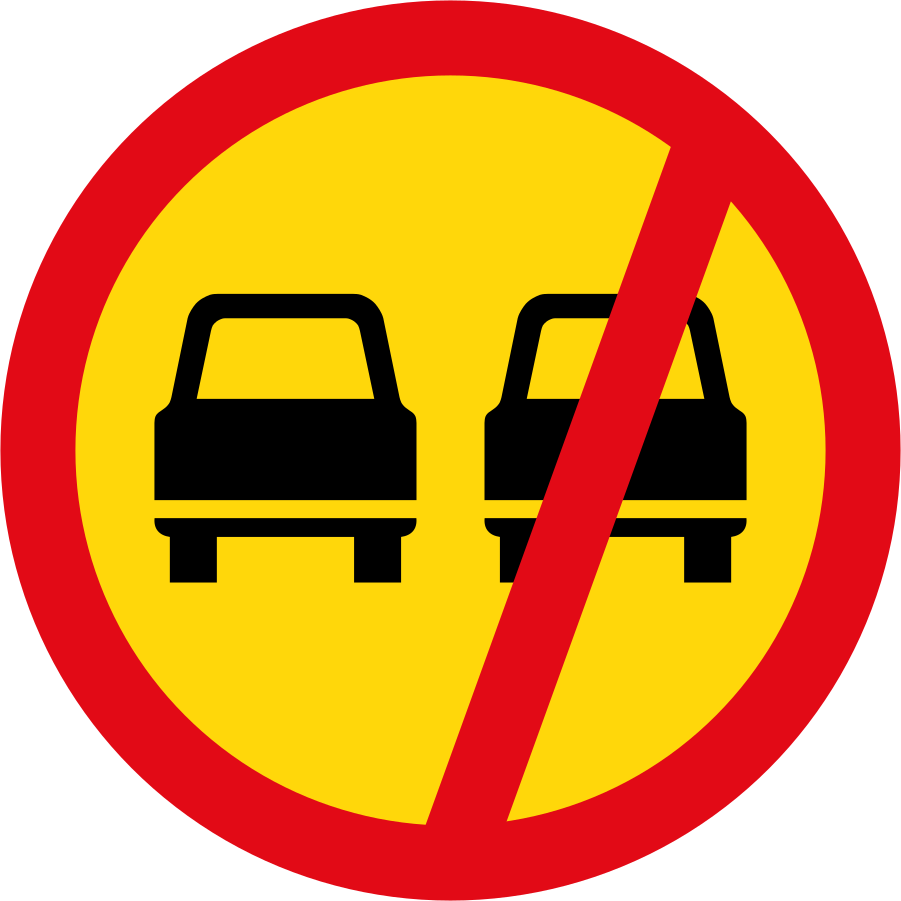
Yellow signs are temporary signs for roadworks. This one has the same force as a white no-overtaking sign while it stands.
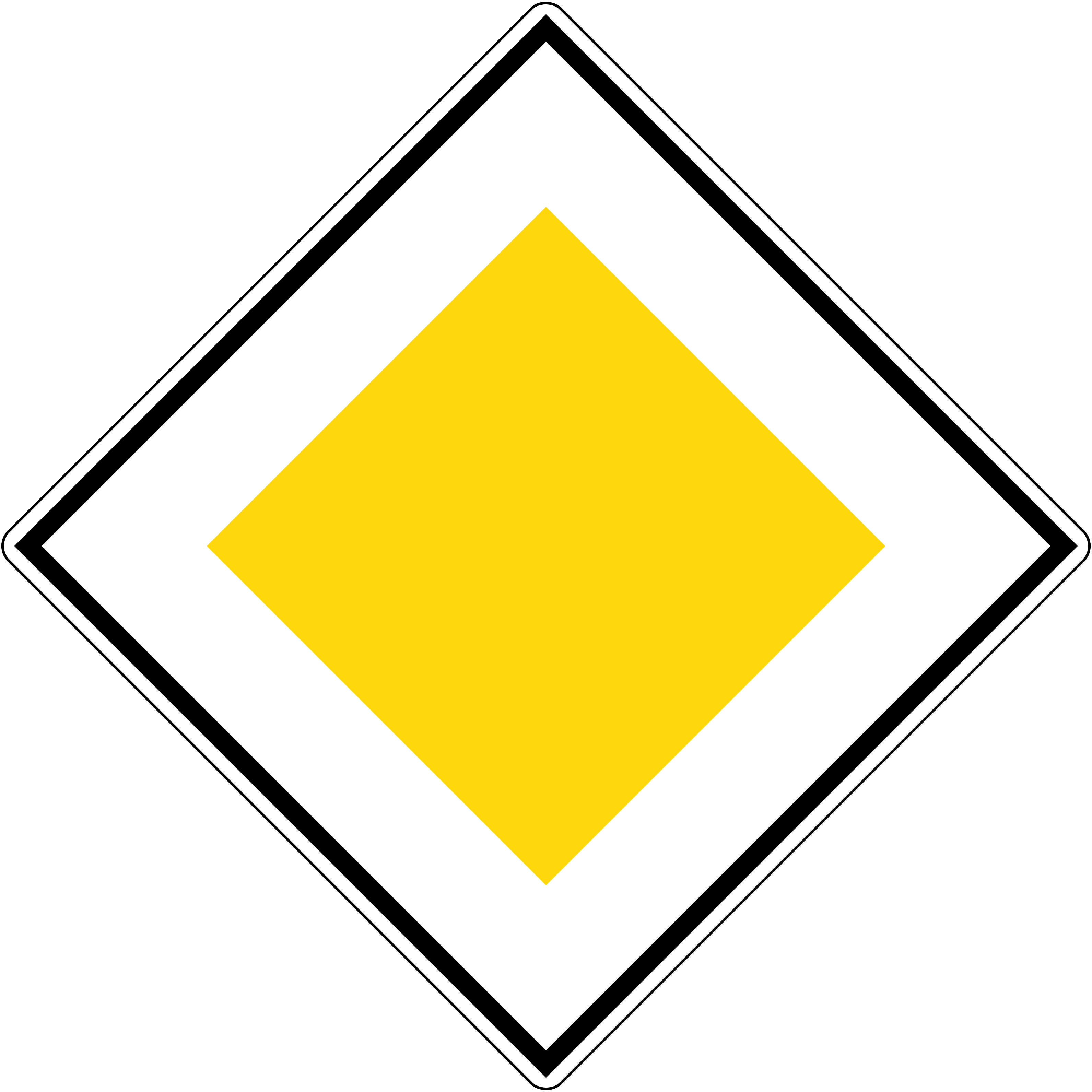
This diamond with a yellow centre is the right-of-way sign. Traffic on side roads must yield to you, but still watch for drivers who do not.
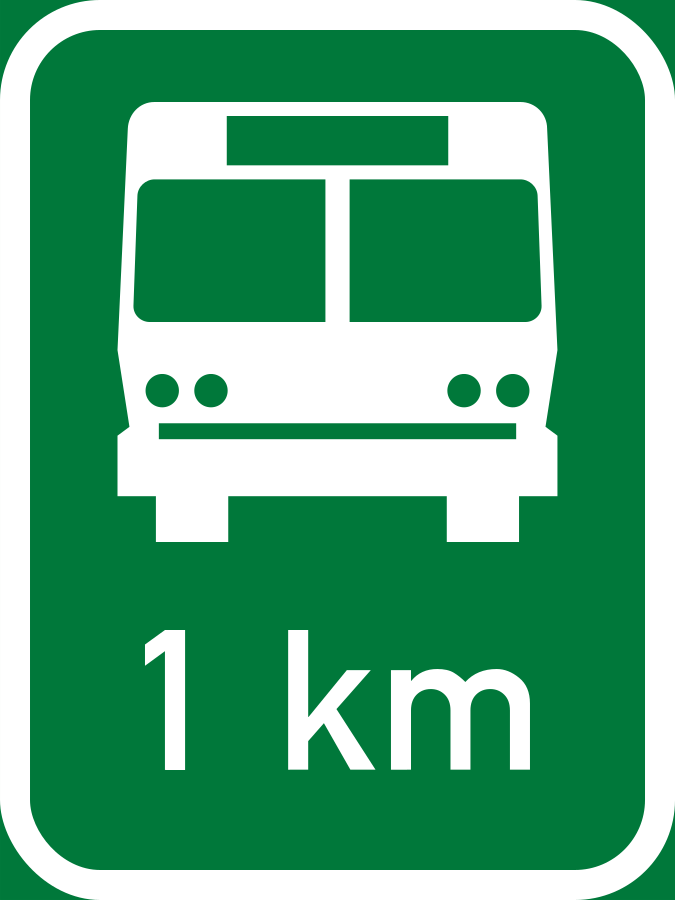
Green information signs give advance notice. With a bus and a distance, this one tells you a bus stop is 1 km ahead, so watch for buses pulling in and out.
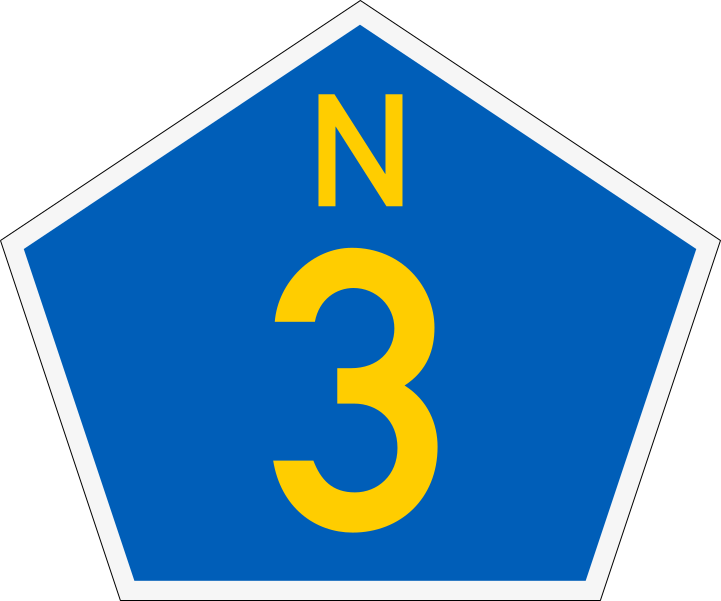
Route markers give the road's number. National routes (N) use a blue shield-shaped marker, regional routes (R) a green diamond, and M is used for metropolitan routes.
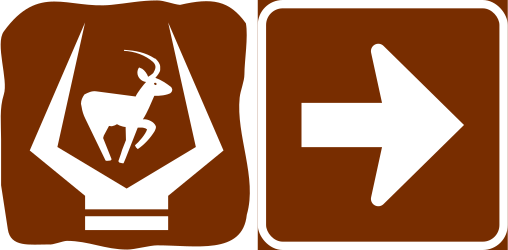
Brown signs guide you to tourist places. The animal symbol shows a game reserve and the arrow shows it is to the right.
It warns of a hazard ahead. It tells you what to expect, not what to do.
It is a prohibition or a limit, such as a speed limit. A diagonal stroke through the symbol means “no”.
It is a command: something you must do, such as keep left.
A yellow background marks a temporary sign, used at roadworks. Obey it while it stands.
Yes. A stop sign always needs a complete stop behind the line, even when no other traffic is in sight.
Ready to test yourself? Write a full 64-question practice test, marked section by section.
Not official: Daily K53 is an independent learning aid, not affiliated with the RTMC or the Department of Transport. We work hard to keep this right, but the road traffic regulations and your testing centre are what count.